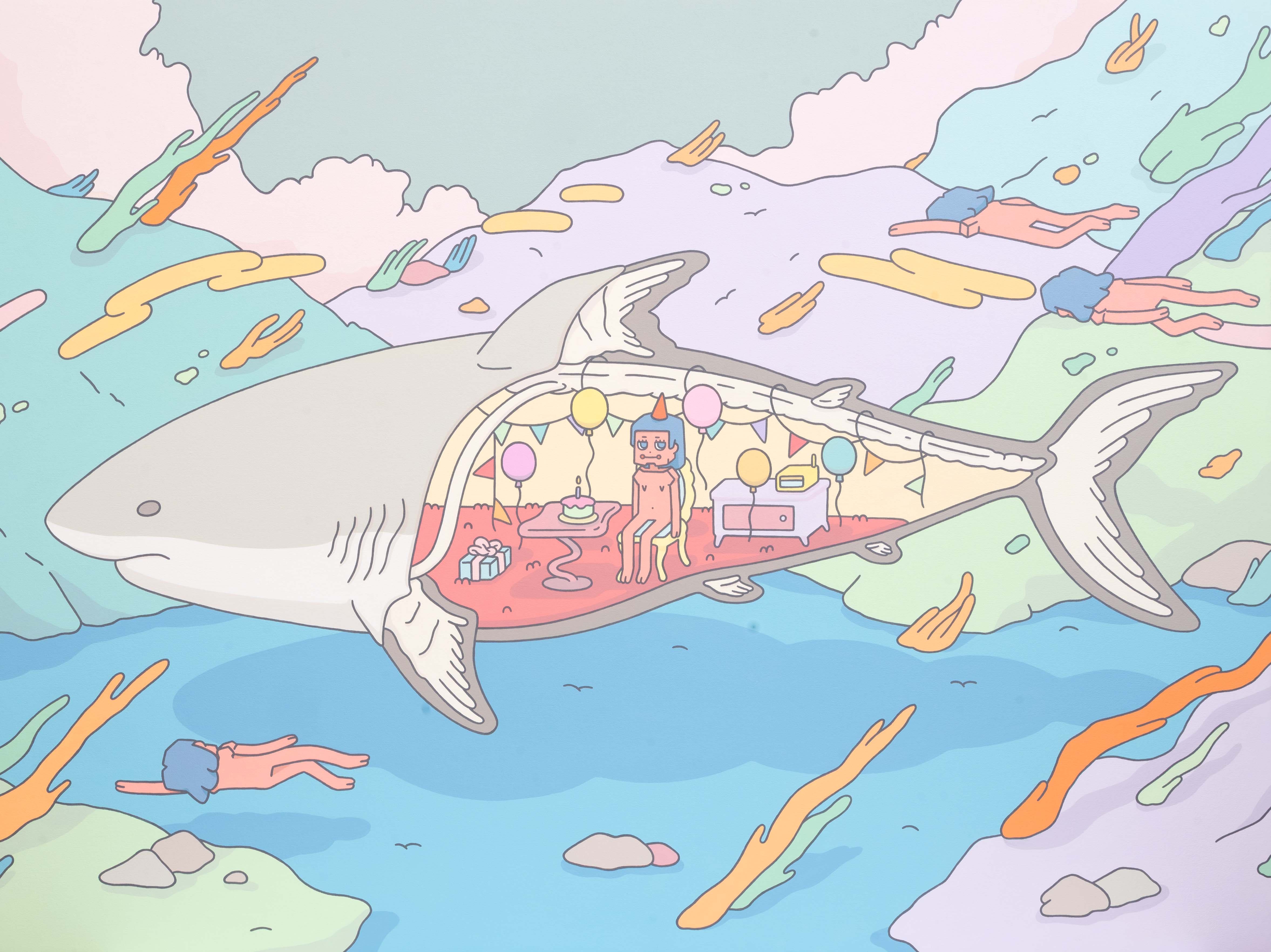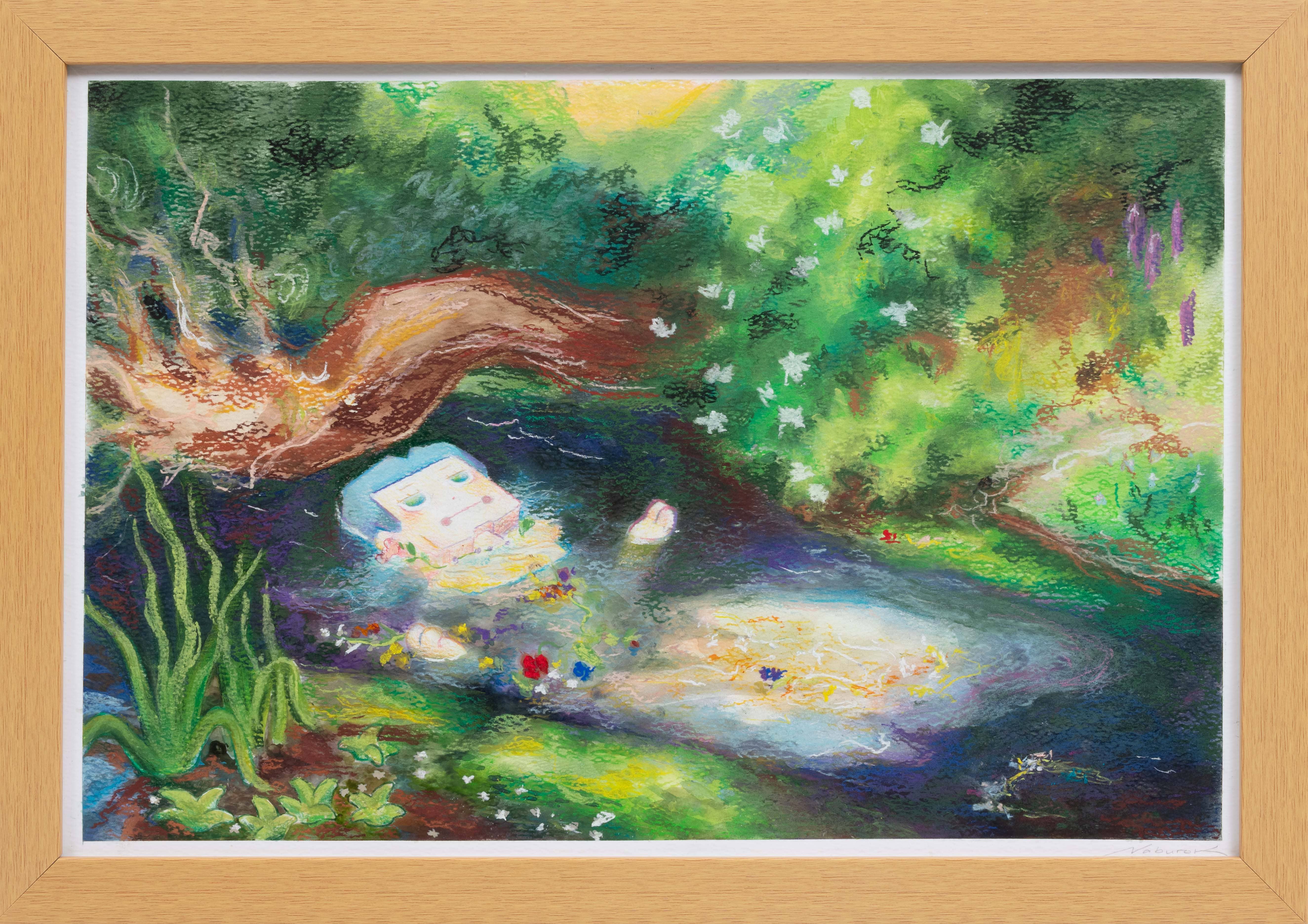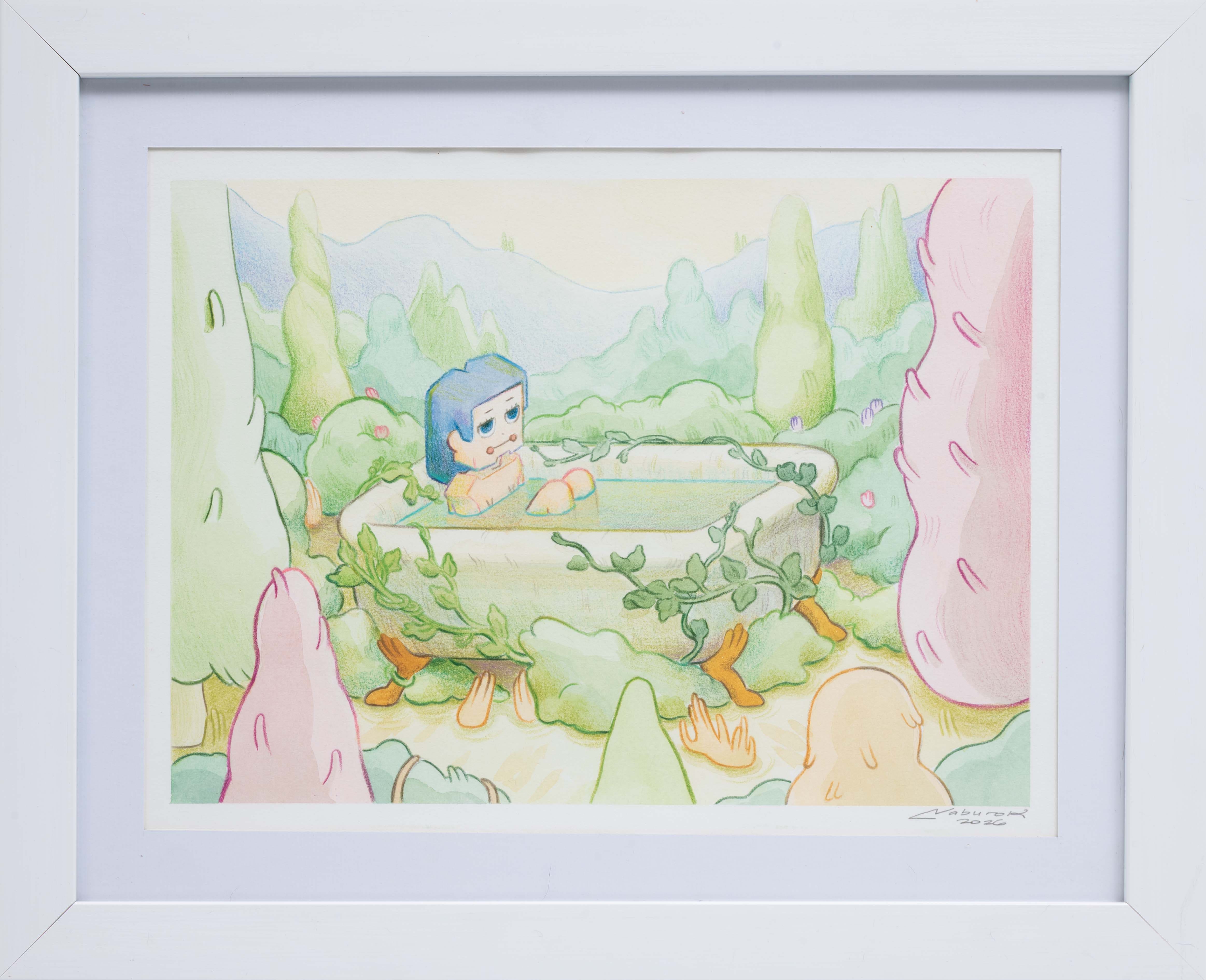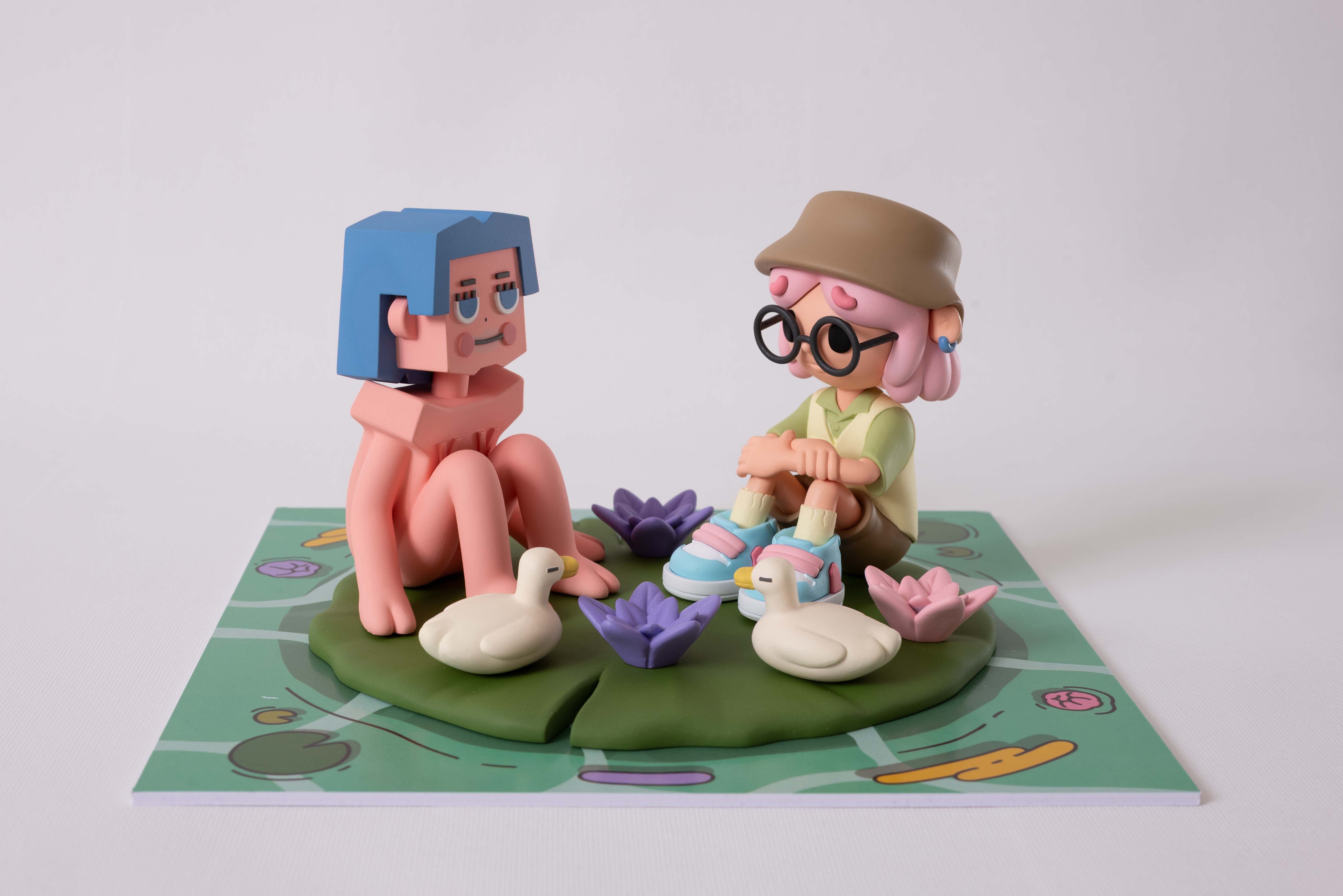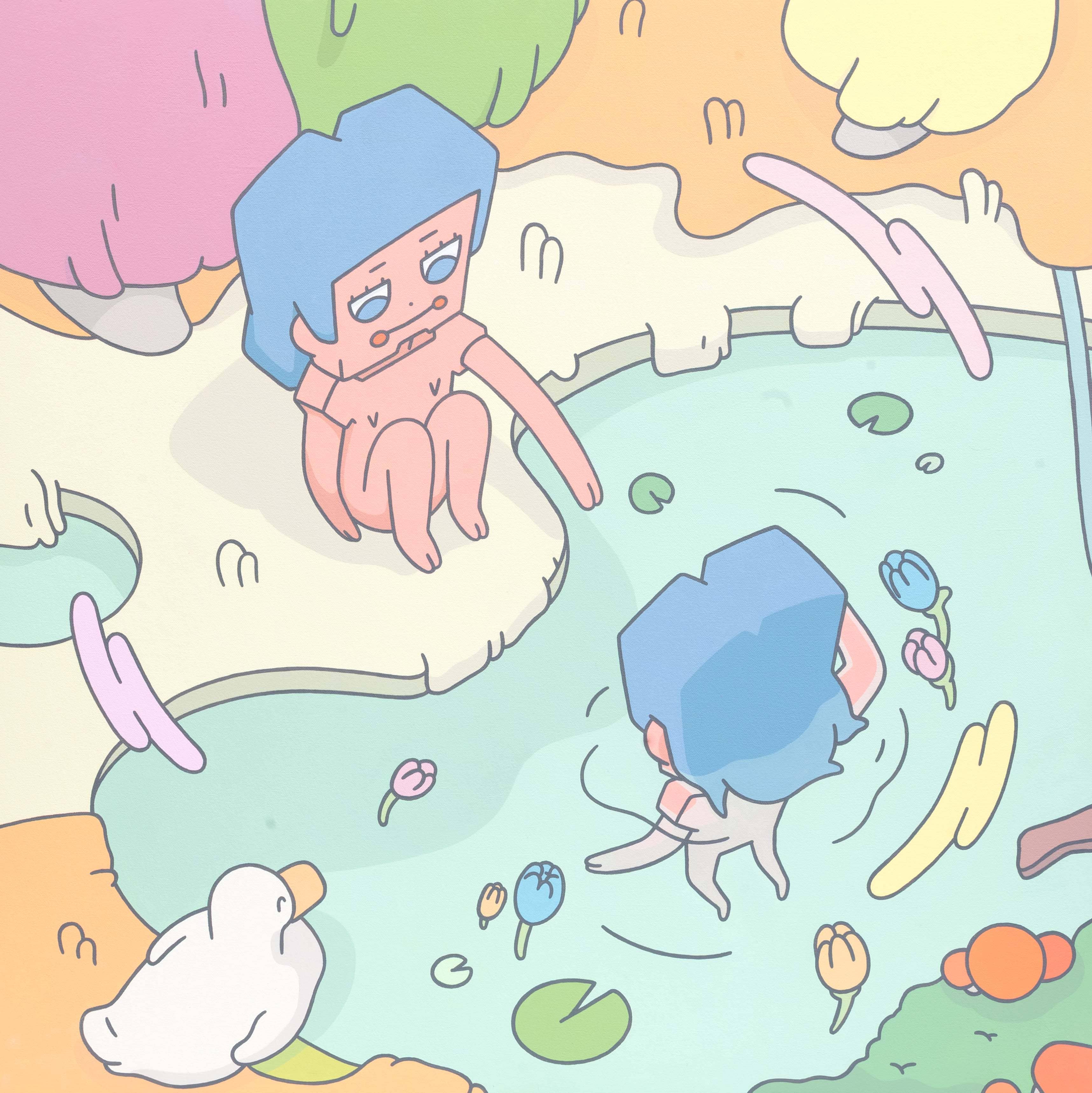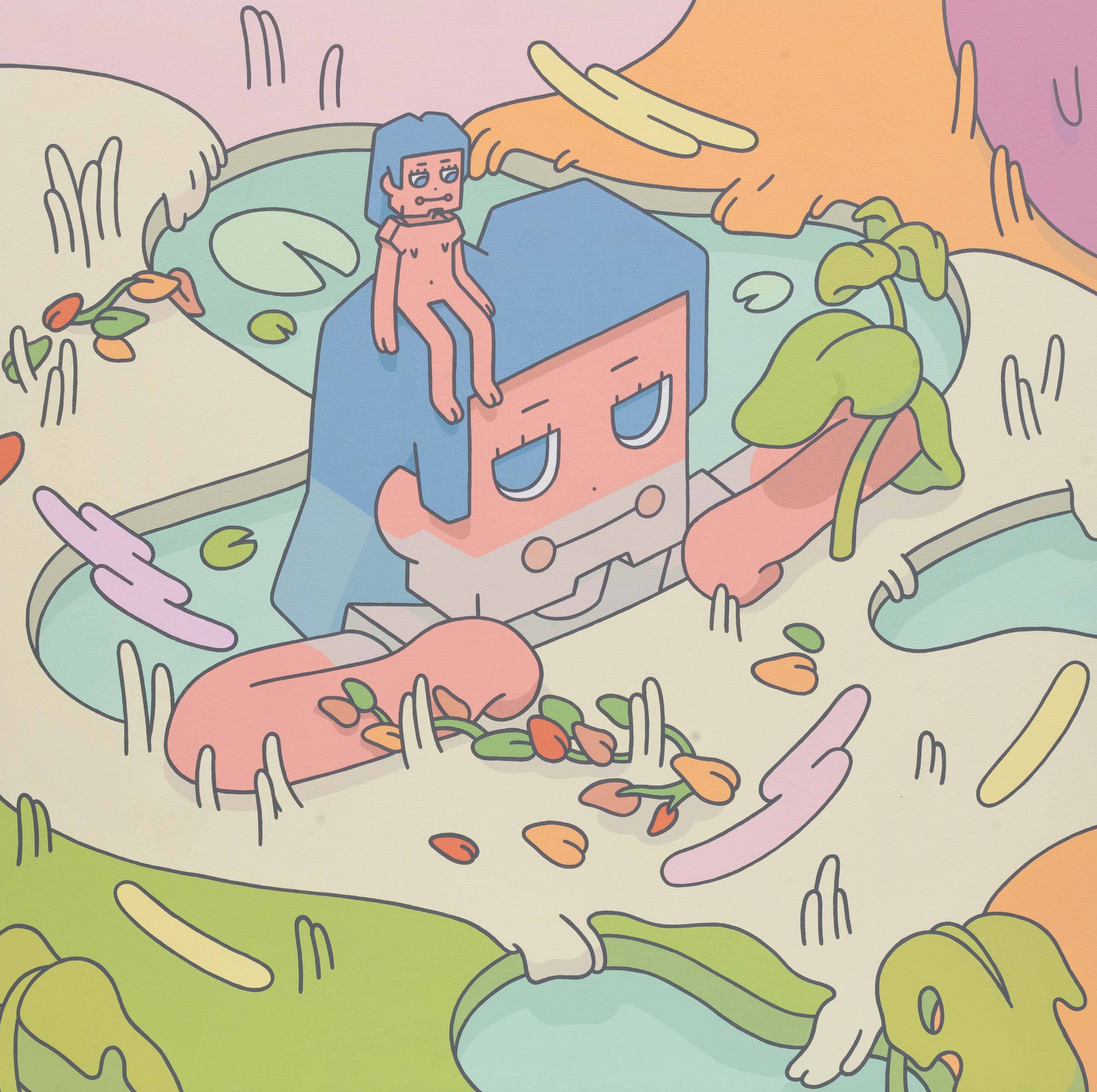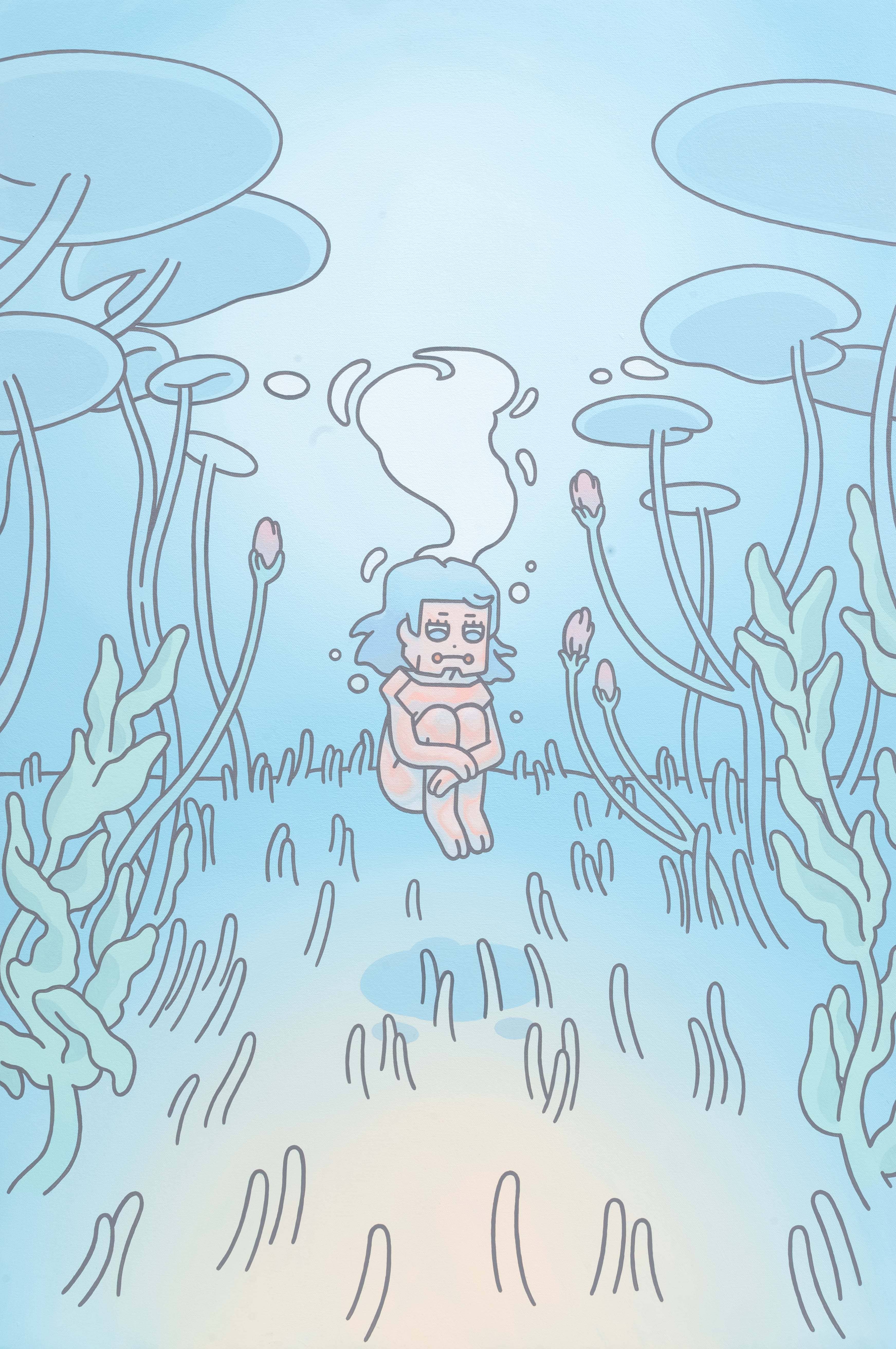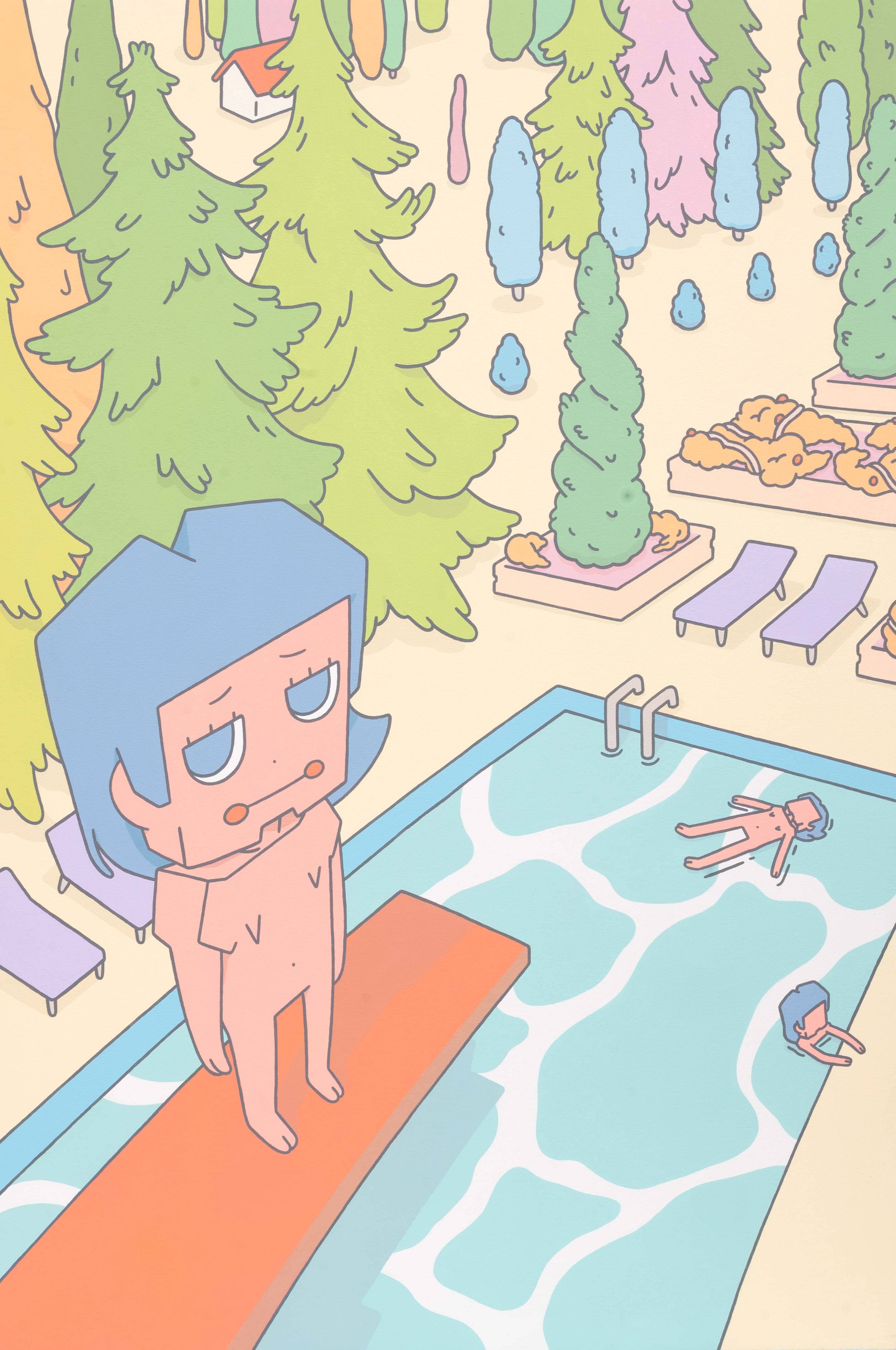
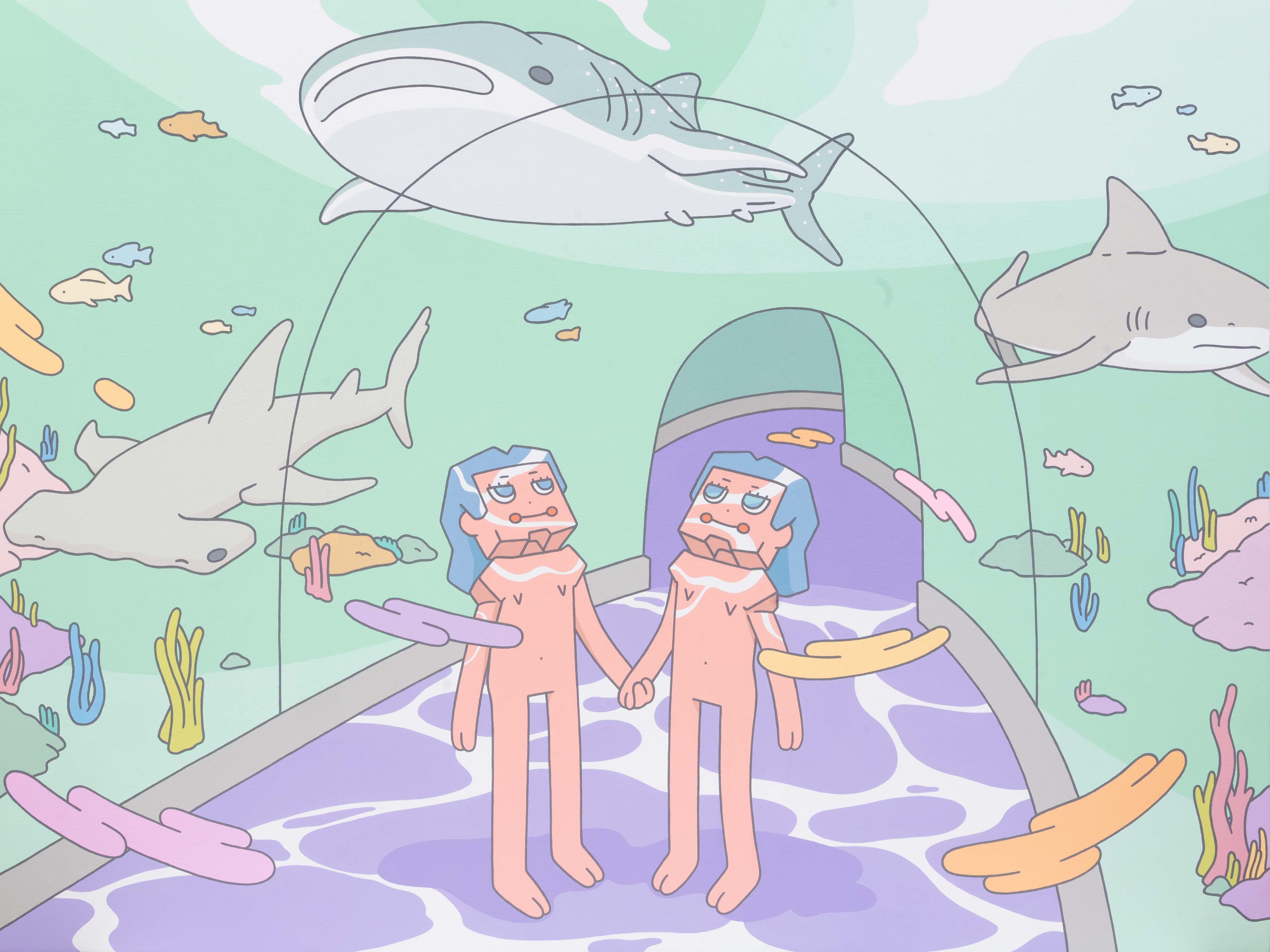
Over the years, Naburok’s visual worldbuilding has been shaped by two seemingly opposing tendencies: the prominence of her eponymous automaton character, and her insistence on articulating through it her most intimate, vulnerable apprehensions. At this juncture where the mechanical meets the deeply felt, Brave the Cold emerges as an account of the artist’s ongoing search for her truest self.
The exhibition unfolds as a meditation on the courage it takes to descend into one’s innermost depths. Water serves as its central visual and conceptual metaphor, dwelling in that suspended instant before the dive, when one musters all courage that will suffice to lift their feet and meet whatever the waters may hold. As the artist reflects, “’Sink or Swim’ was the original title of the show. But then I thought, jumping into the water actually takes a lot of steps before you even get to decide whether to sink or swim. There’s a lot of hesitation, excuses, and time spent just even thinking of dipping your toes in the water.”
To this end, the works depict scenes and images that symbolize various objects of Naburok’s personal fears. They range from comic to profound: from a lighthearted fear of sharks to the inescapable, deepening pull of emotional unrest. Yet at the same time, threaded through them is also a celebration of human warmth. Populating the canvases are multiple Naburok figures holding hands, lingering in each other’s company, or simply being together. She explains that the characters represent her loved ones—presences that steady,
accompany, and ultimately embolden her as she takes the plunge.
From these, Brave the Cold gestures toward a broader quest for growth. The English idiom from which its title is derived suggests a resolute willingness to endure harsh conditions in pursuit of one’s aspirations. In the artist’s case, this ambition turns inward—toward a ‘true self’ that may reside in the deepest, darkest reaches of the sea. The abyss that separates us from our desires may be daunting, but with oneself—and with others—it is, after all, not a lonely descent. From this, Naburok concludes:
“As long as I know the shape of my soul, I’ll still be here with myself. I just have to bring myself wherever I go. And while I’m searching for my truest colors, I hope I can feel like I’ve reached something real at every stage.
I just want to be me.”
Text by Chesca Santiago