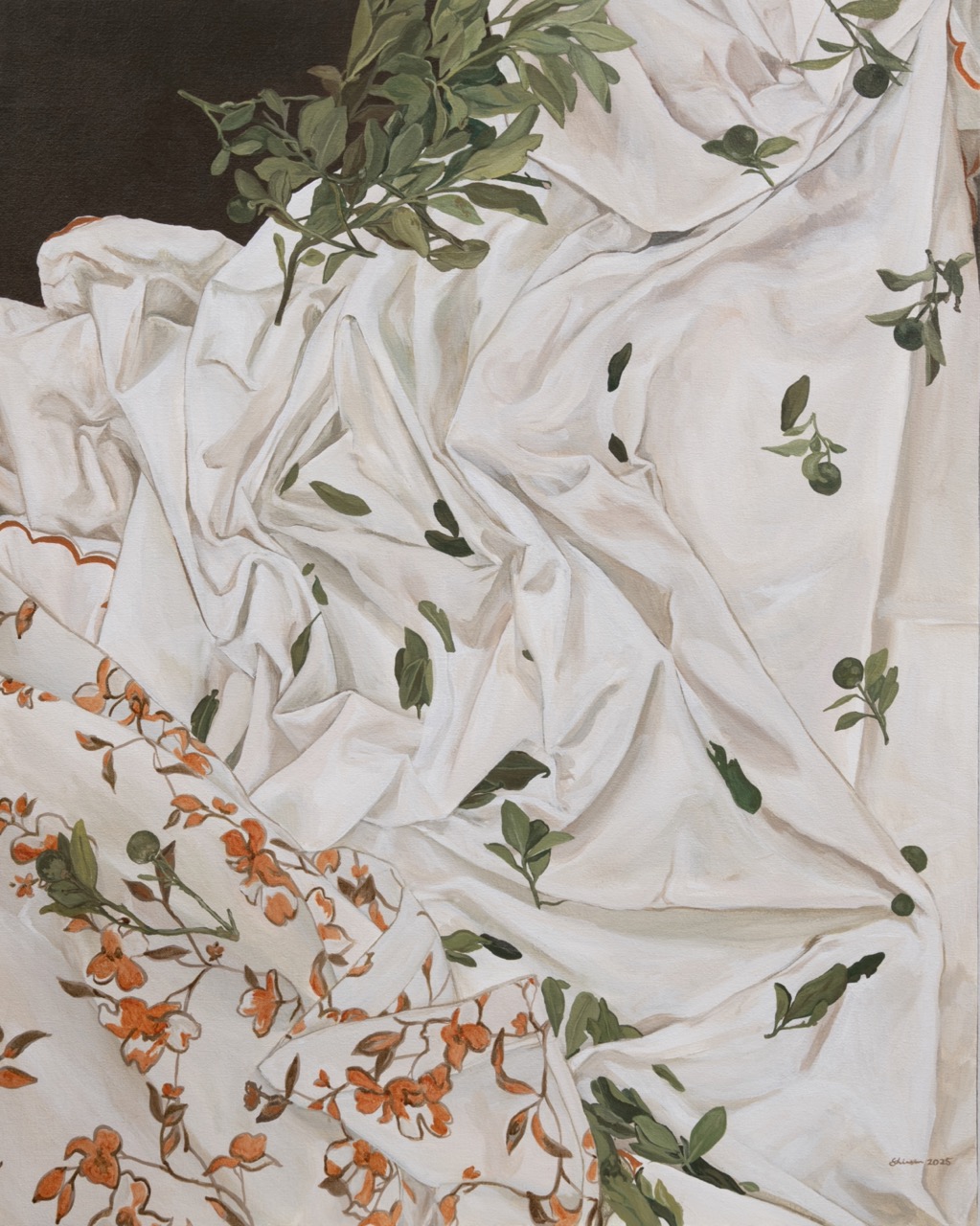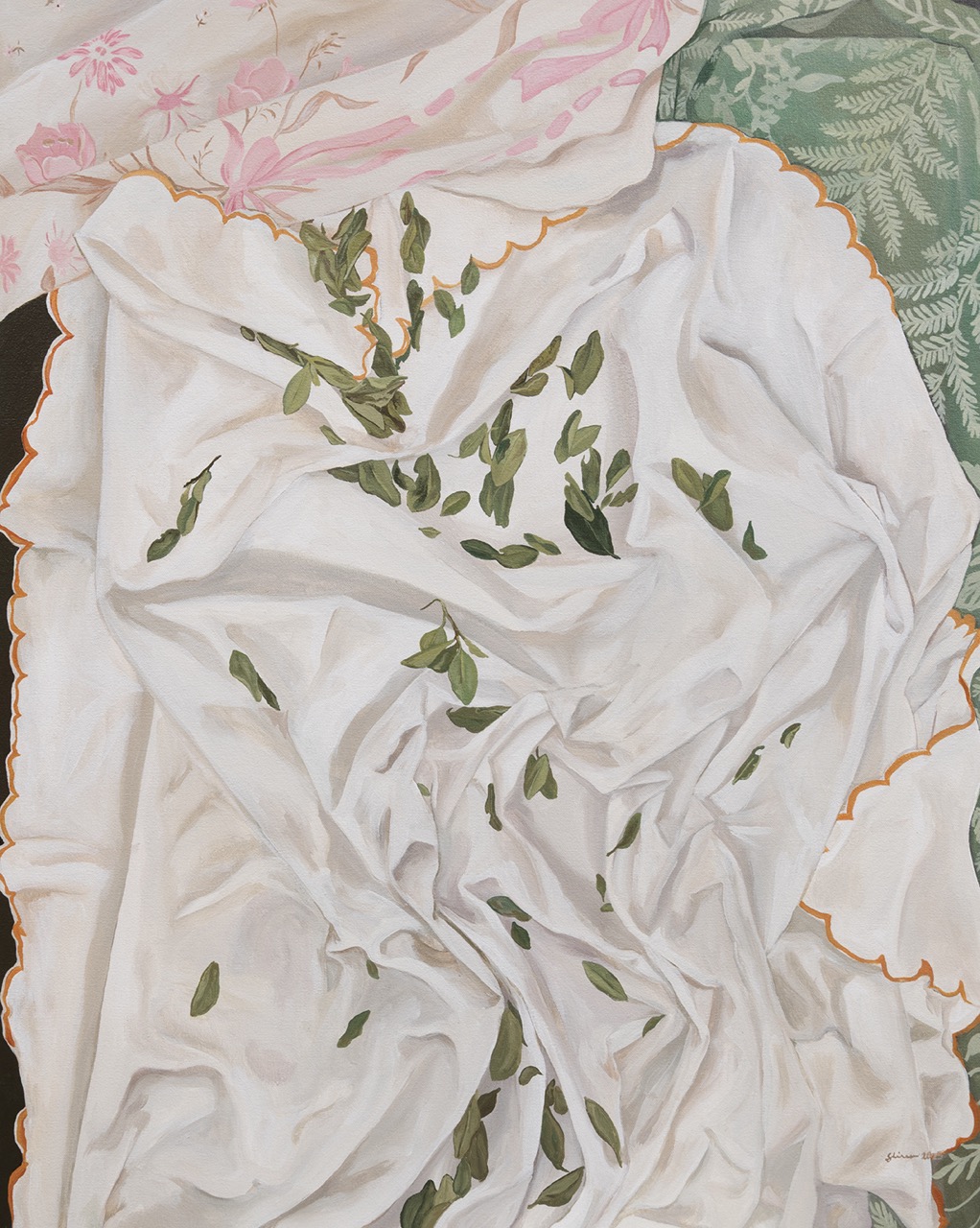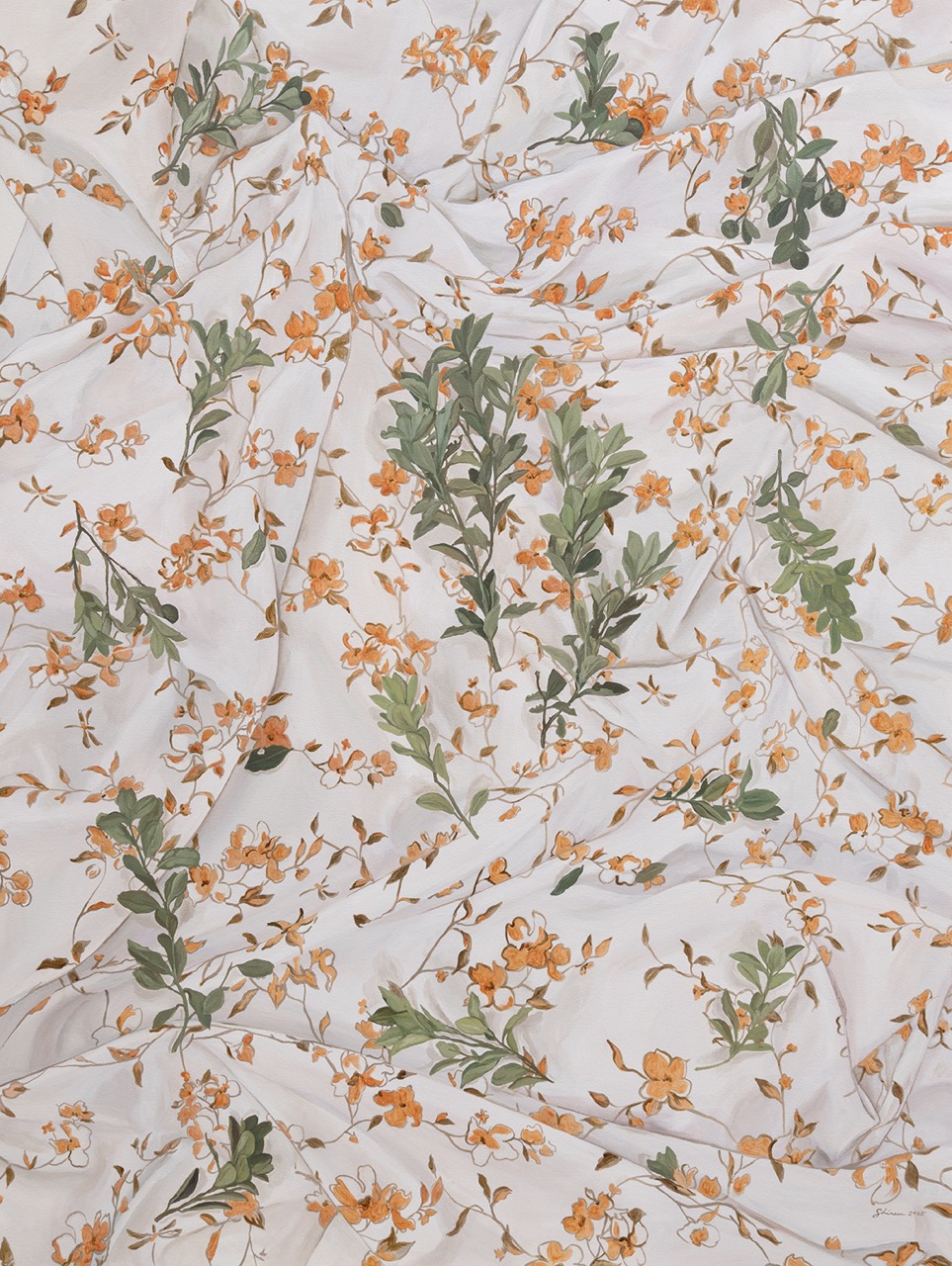
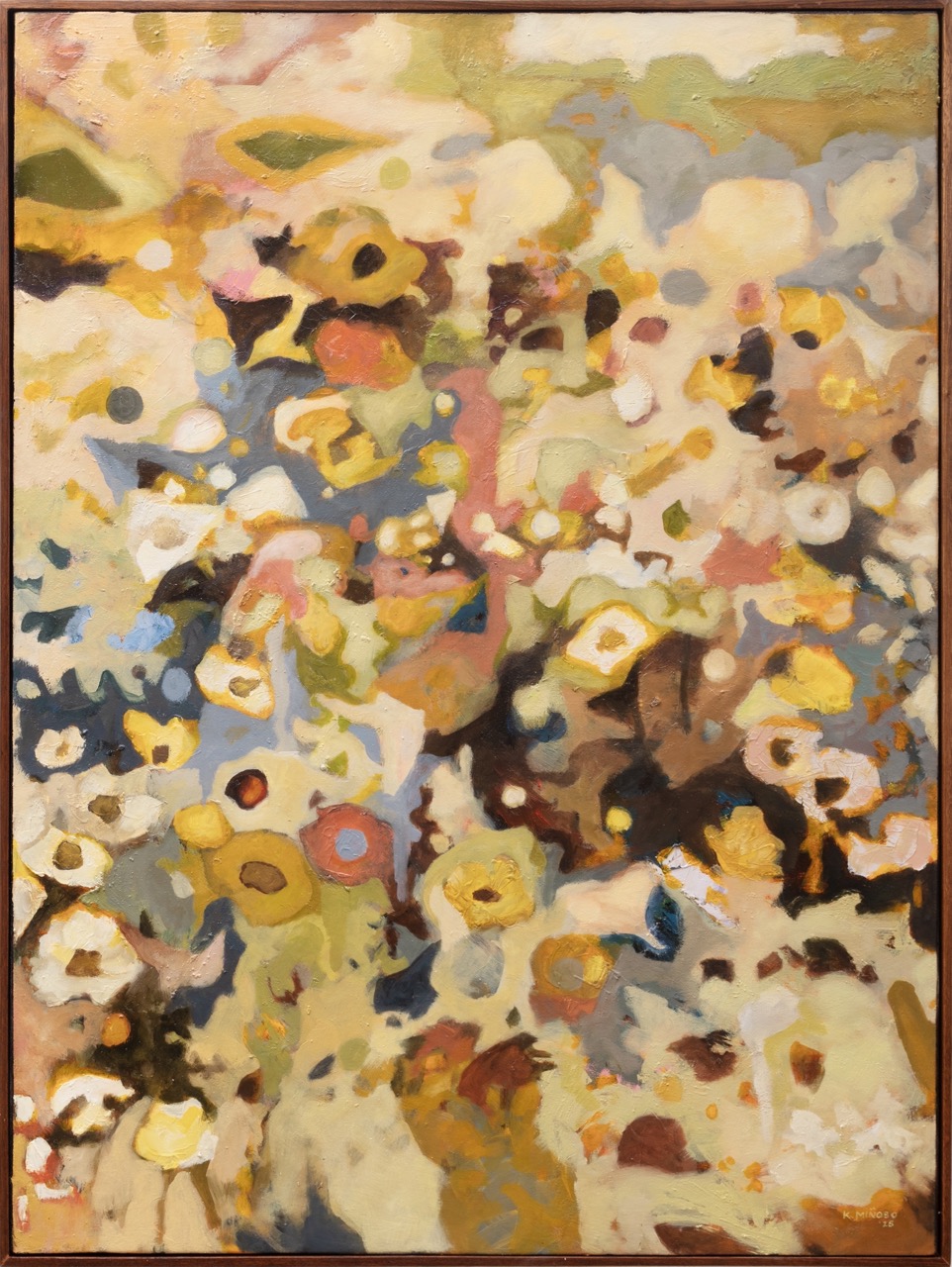
Gentle Hands That Built the World imbues nature and the earth with a reflection of womanhood, and within that a reflection of the self, as Shireen Co and Katelyn Miñoso each contemplate the apparent roles one may hold, and pick through the different labels one may take on.
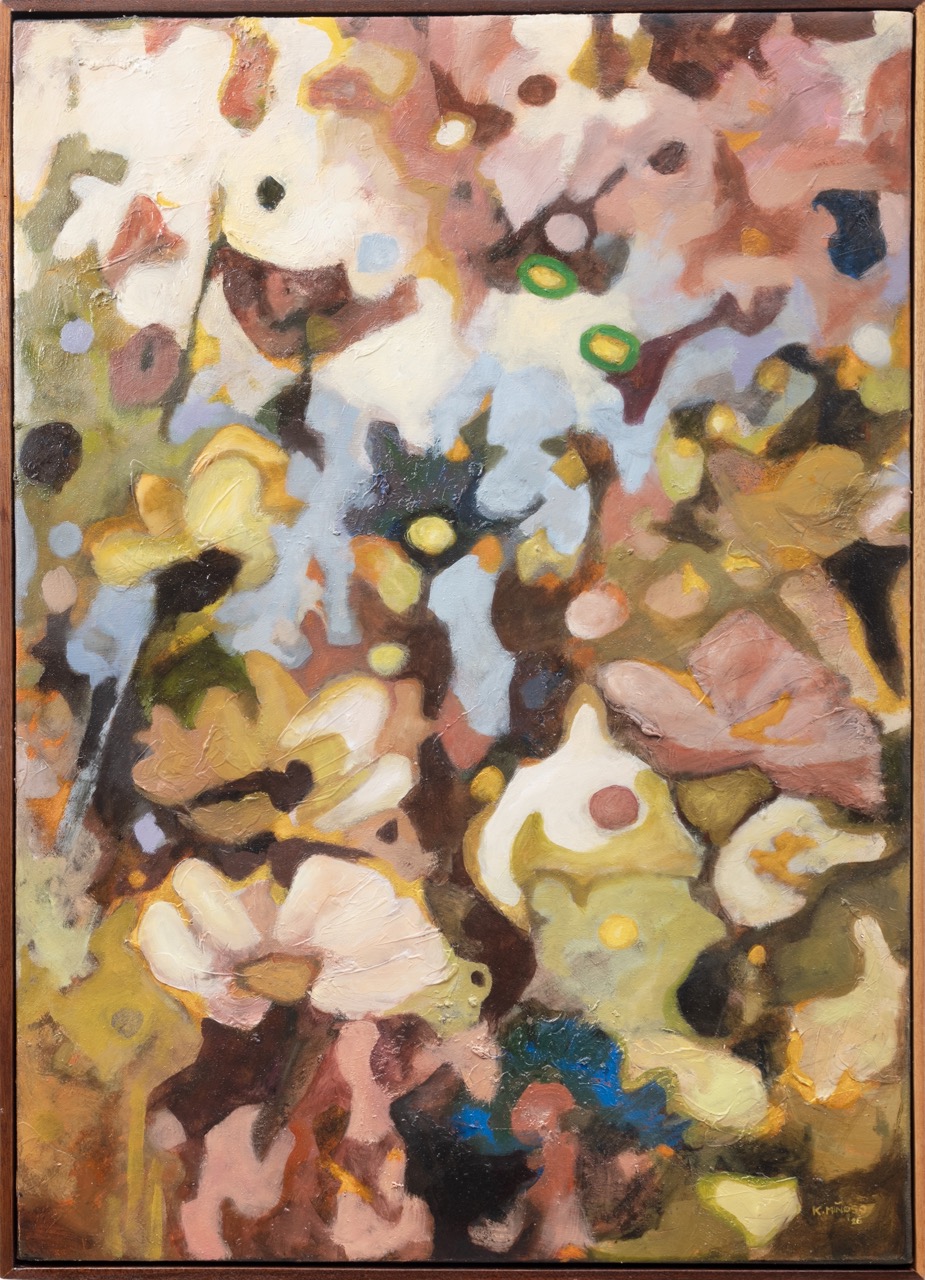
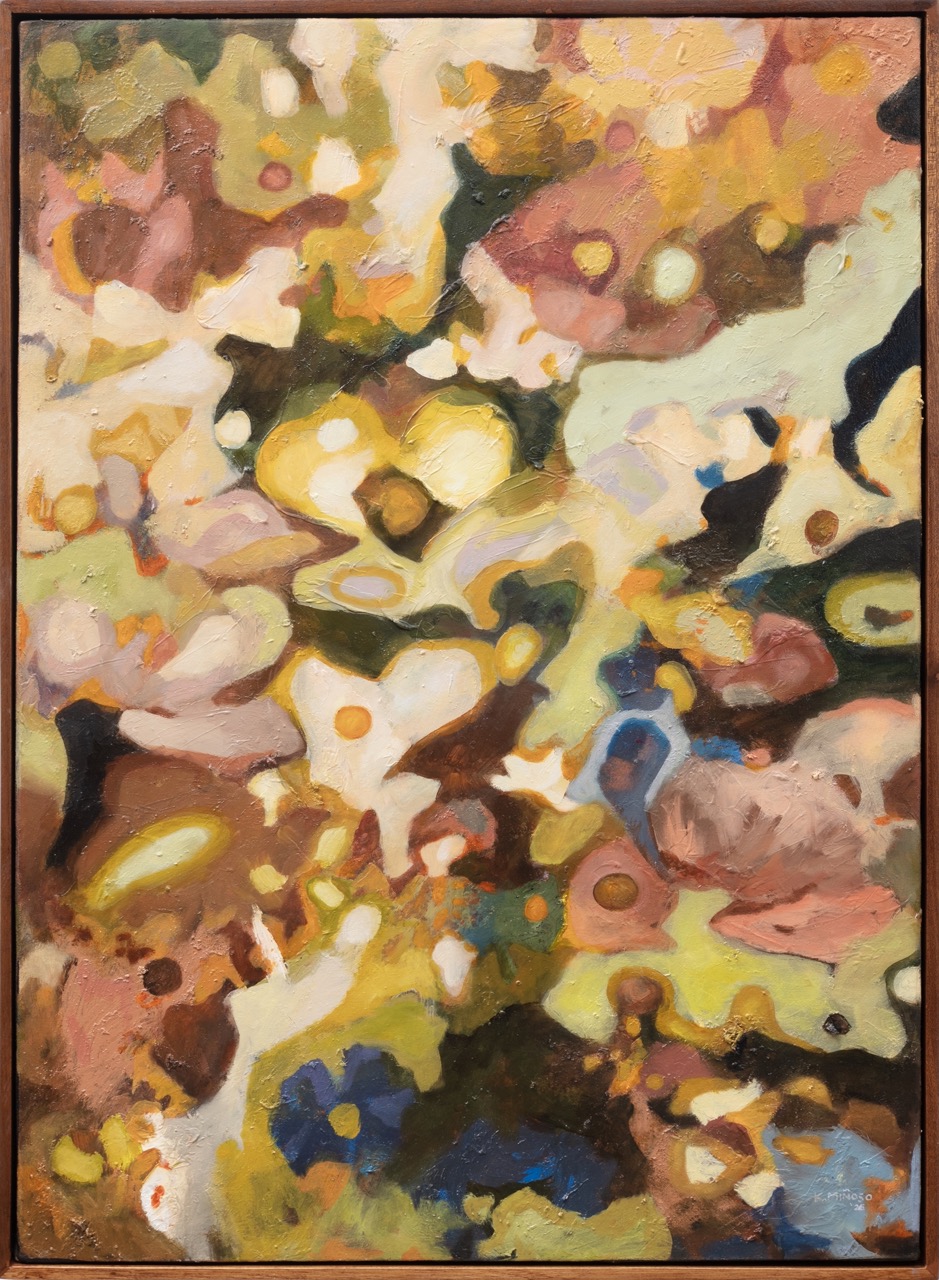
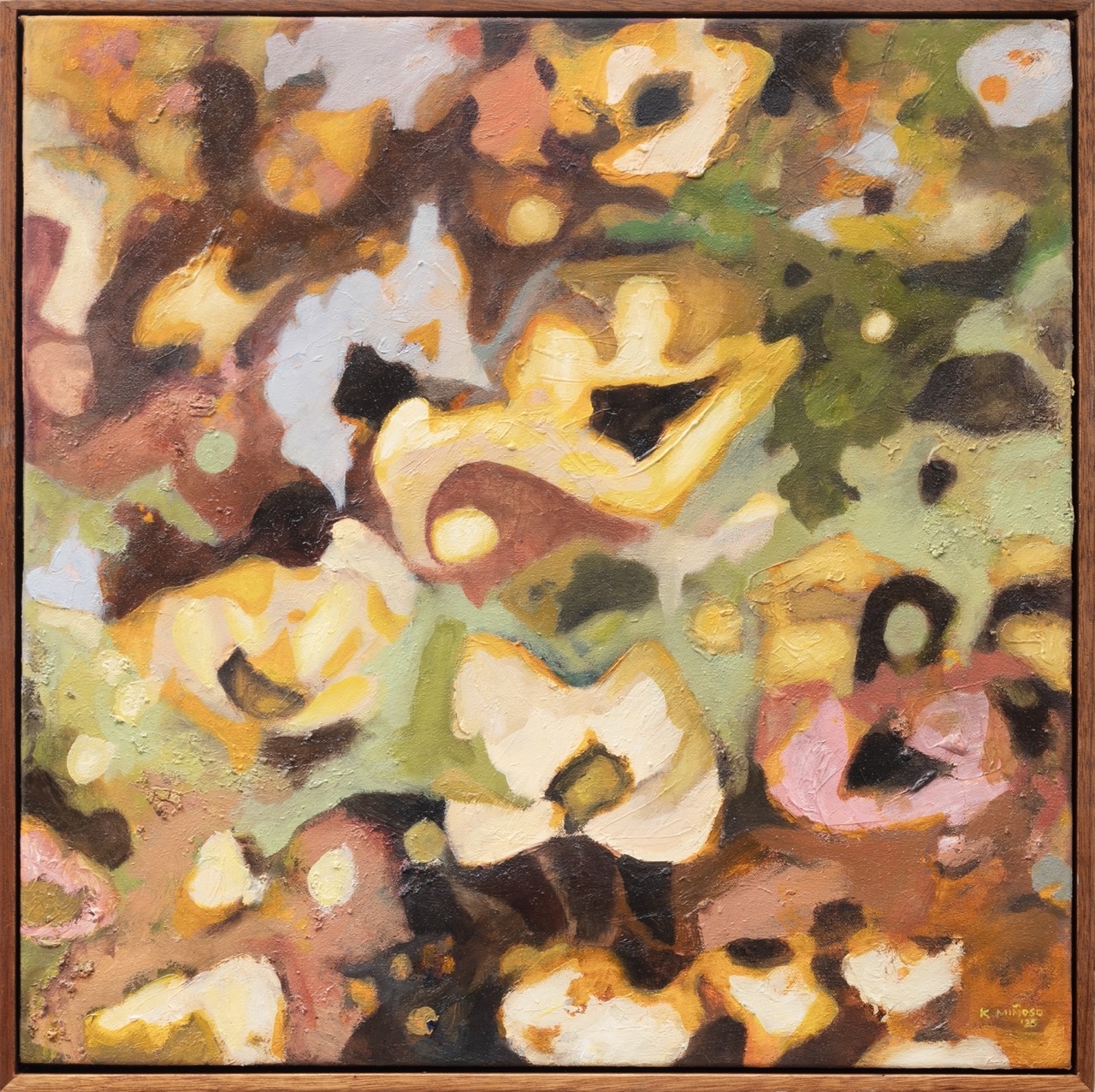
Miñoso’s landscapes are warm, sun-dappled. Wildflowers sway together, richly colored. No vase would cut them at the stem or contain them; they are free to turn their faces to the sun, seek water with their roots, and push through the grass, growing where they please. She notes, “Nature is not only soft. It is also wild, shifting, and self-determined.” So does she think of a woman’s identity.
Becoming I & II are pictures of the process of finding this identity, whether by wrestling out of an imposed role, by a gradual coming into being, or by a seemingly accidental shift in circumstance. The landscapes come into focus as she settles on an image that feels true, honoring who she is meant to be. In Many Ways to Be, she asserts that women exist in all forms, undefined, the self determined simply by the choices one makes. She writes, “Every presence holds value on its own while contributing to something larger.” As I Go reflects a resolution in the disarray, a peace in the acceptance of what is.
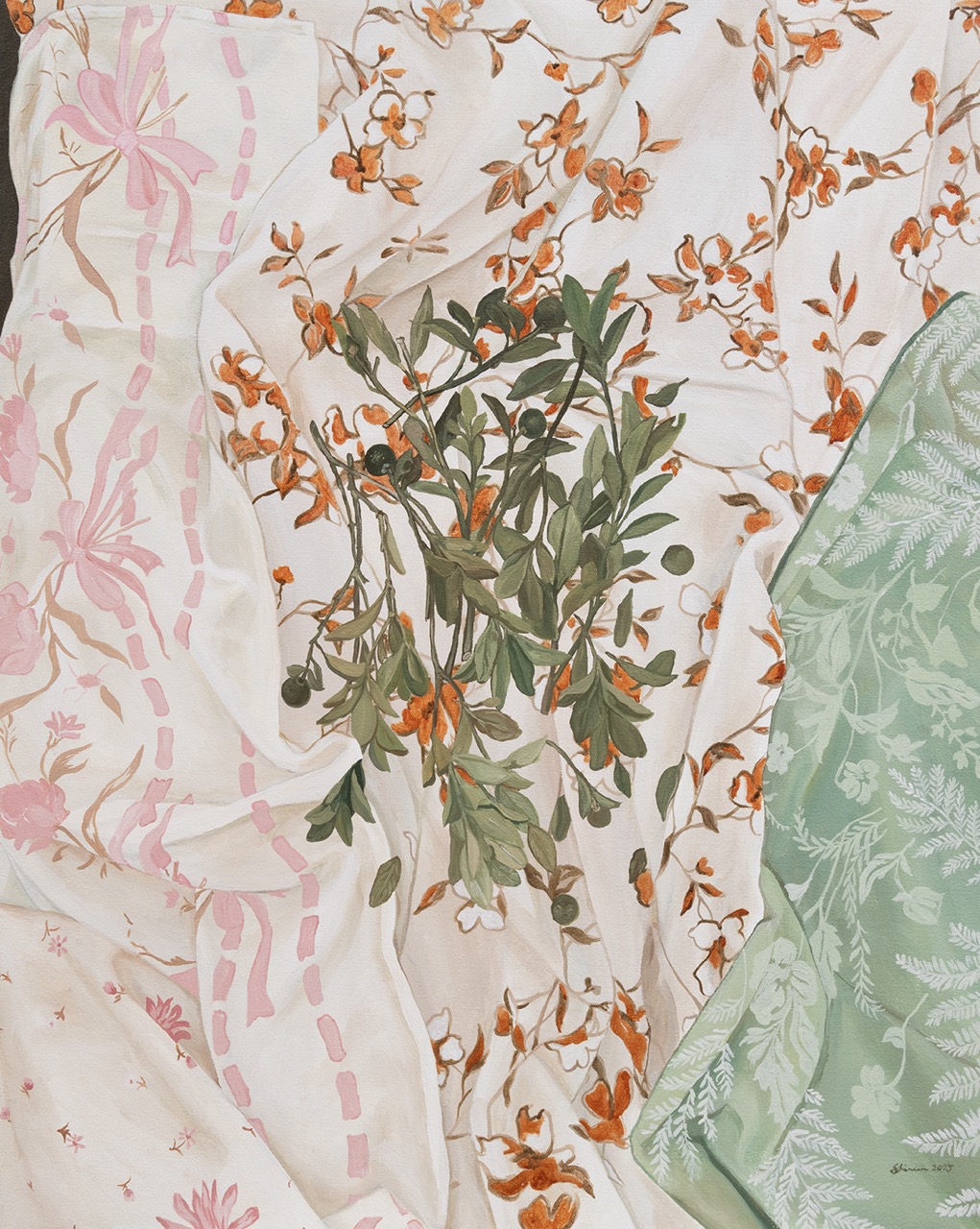
Co paints leaves and tree cuttings unceremoniously scattered or swept up on curtains, blankets, and tablecloths. They are cut from a single fruit tree in the yard. Pruning, the practice of removing excess, diseased, or non-pro- ductive parts of a plant is done so that nutrients might be redirected to where it can be better used: producing more fruit or flowers. Similarly, the self must also be pruned, cutting away the things that hinder it, in order to continue growth.
She thinks of her mother who works in the garden in the morning, weeding and watering it as she did her home, cultivating and harvesting it. The shaping of a home, a situation, a relationship, or the self can be painful but nec- essary work. But there is comfort: Halamanan allows space for life to take place, to produce, shift, and also wither. Pagtabas/Pagyabong accepts the cycle of cutting open to interrogate the self, in order for the new to sprout.
These portraits complement each other as it is real and experienced, personal. The woman evolves in sponta- neous expression, alongside practical self-reflection and intentionality. Within or beyond the walls of a home, in a vegetable garden or a field, she must be free to exist fully as herself.
Text by Shireen Co