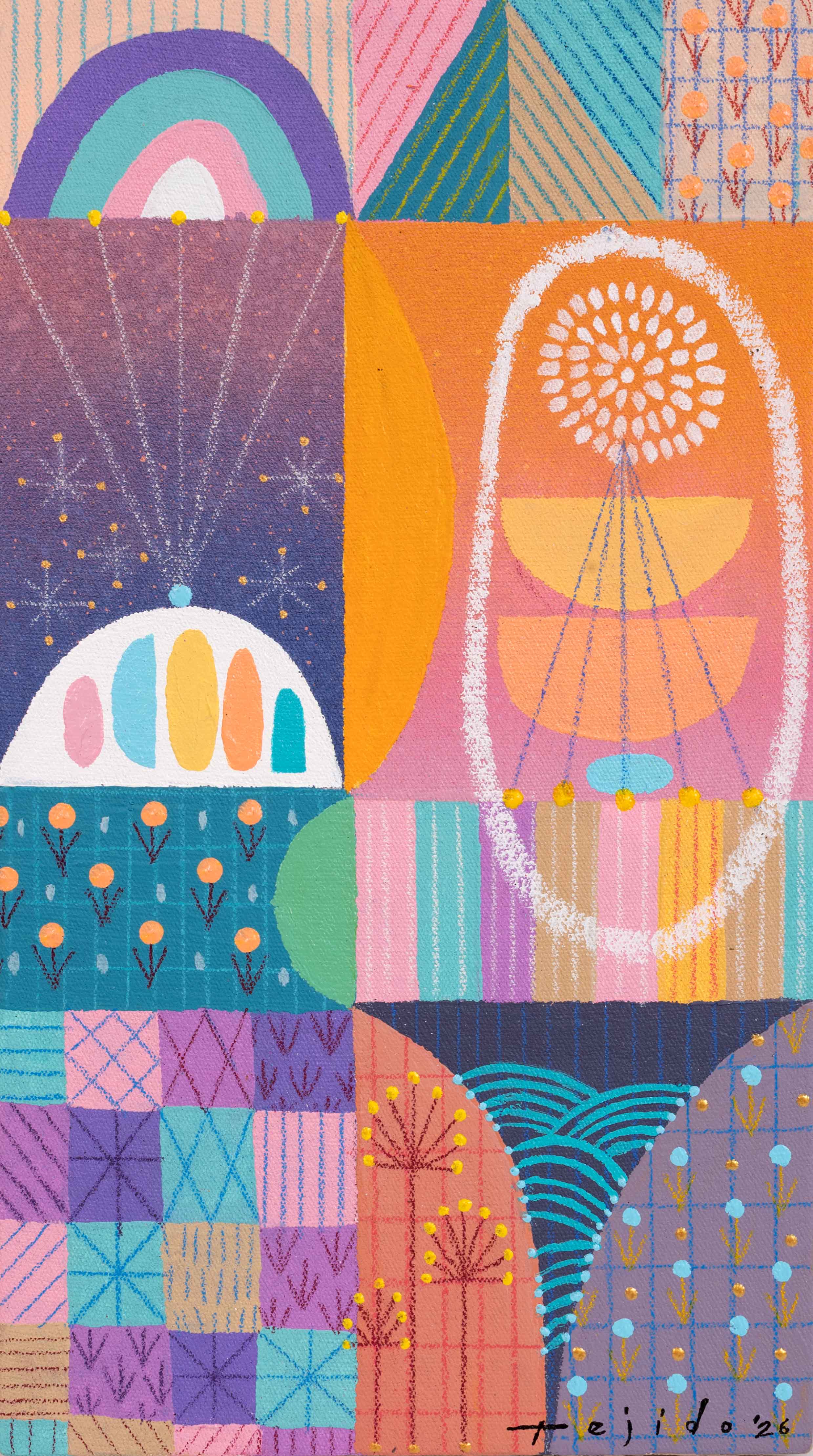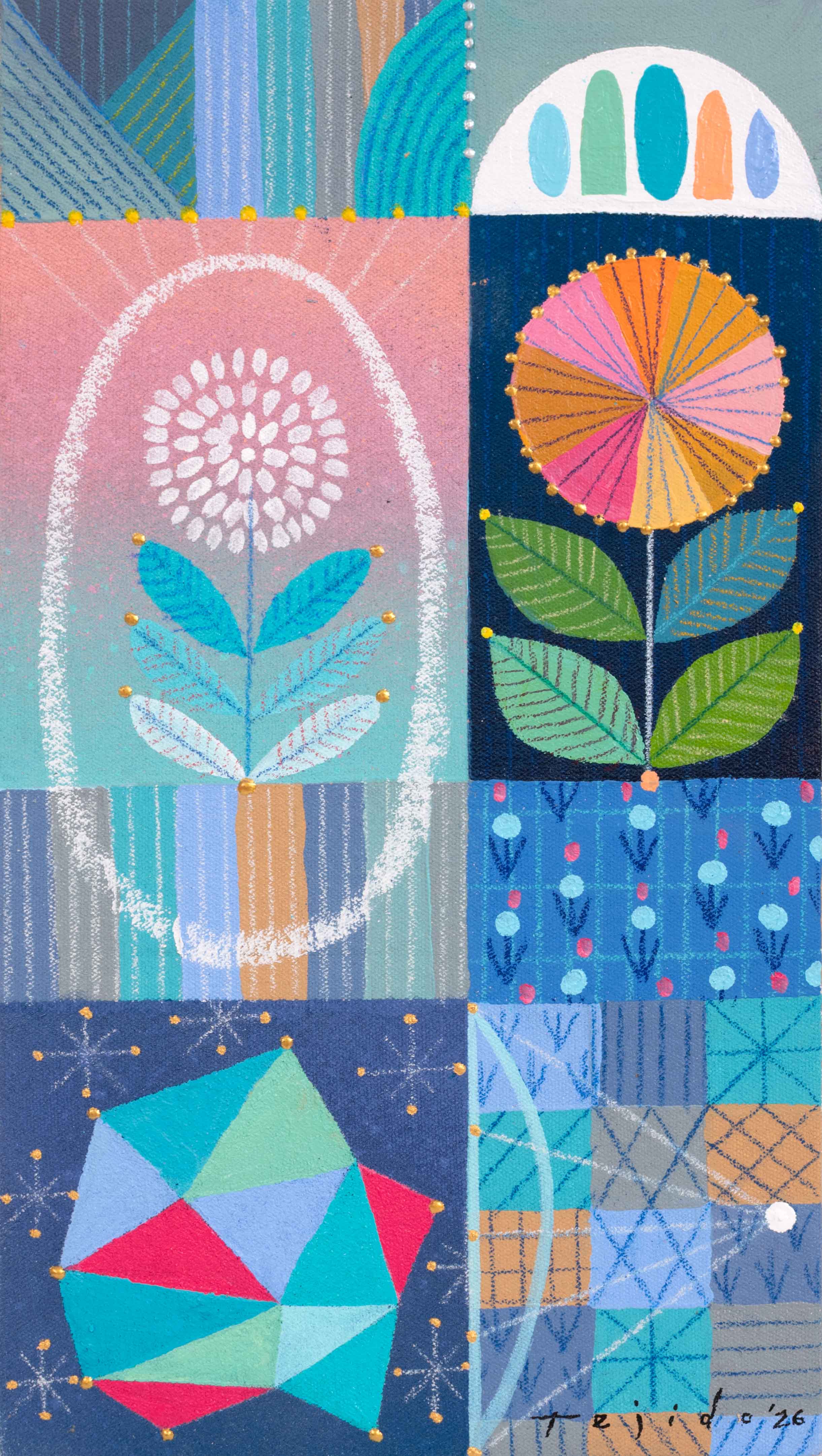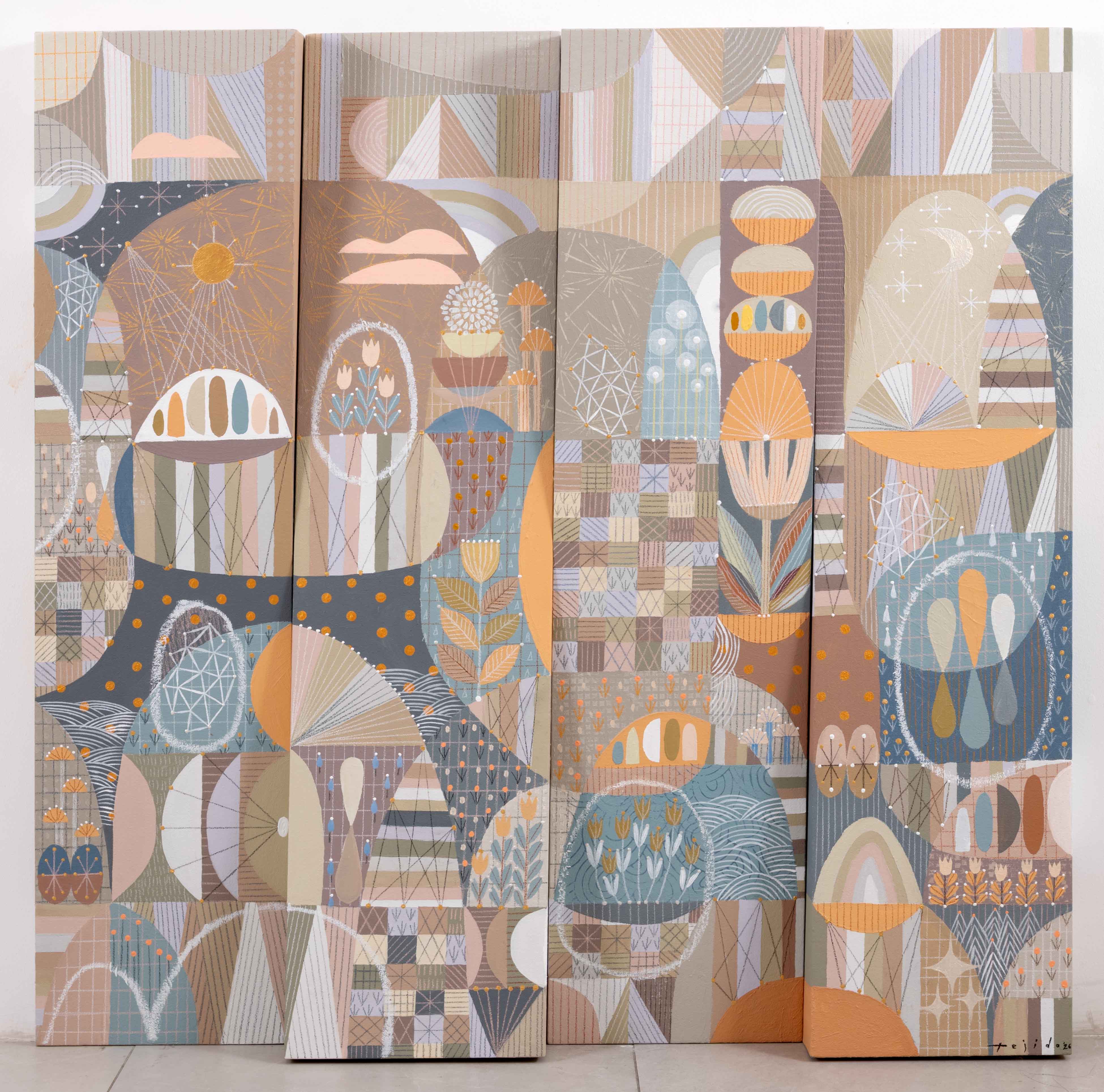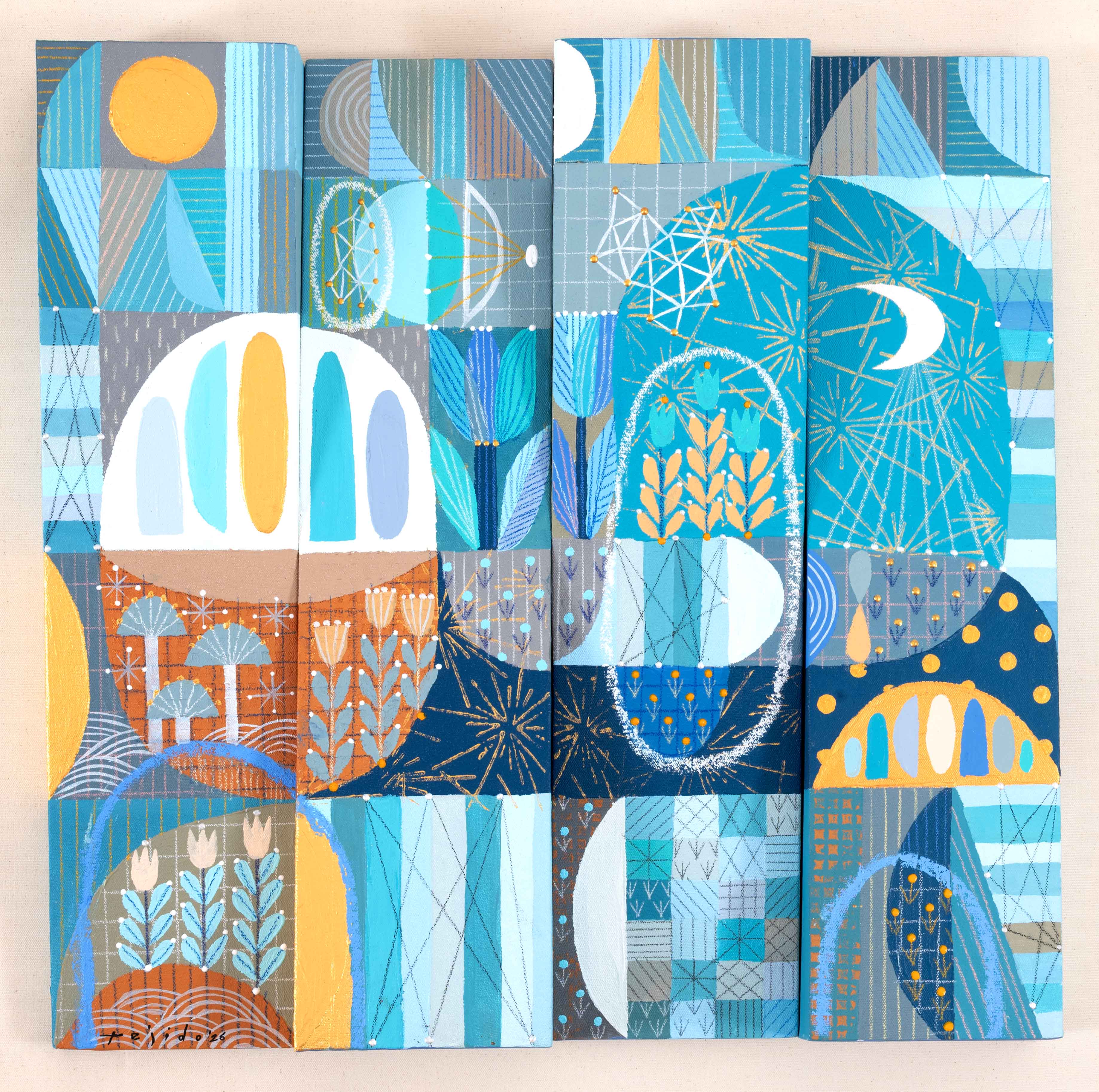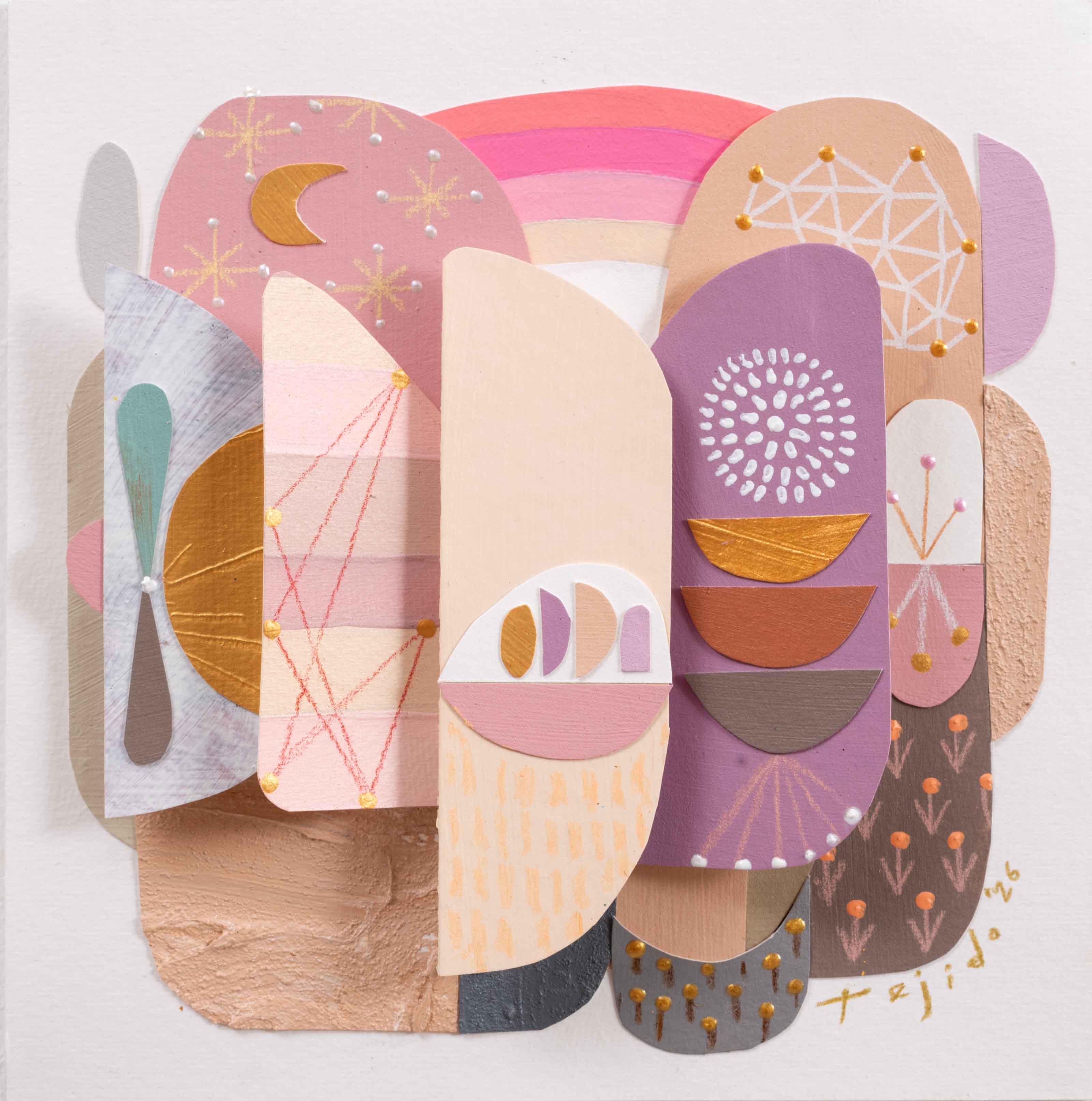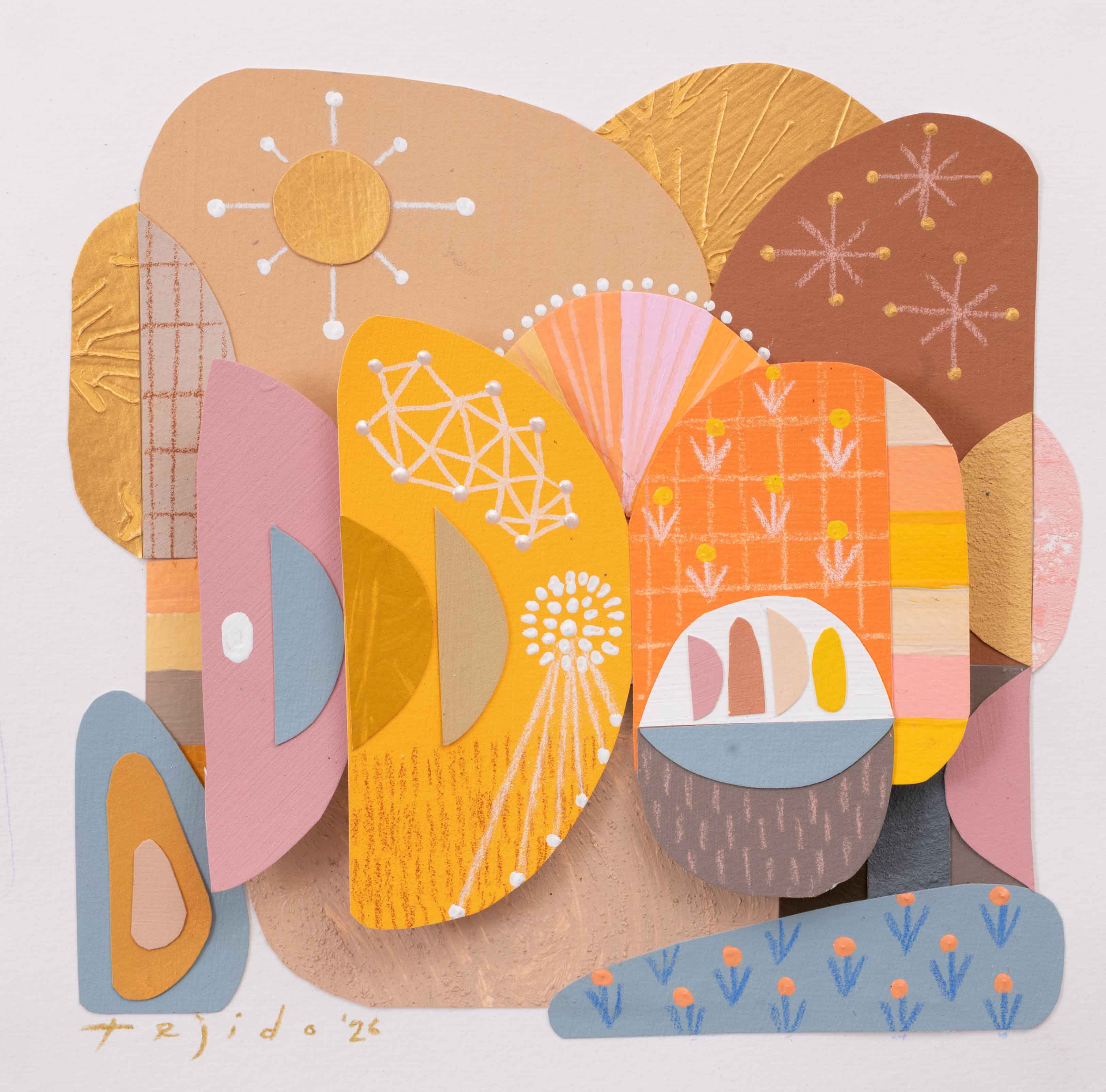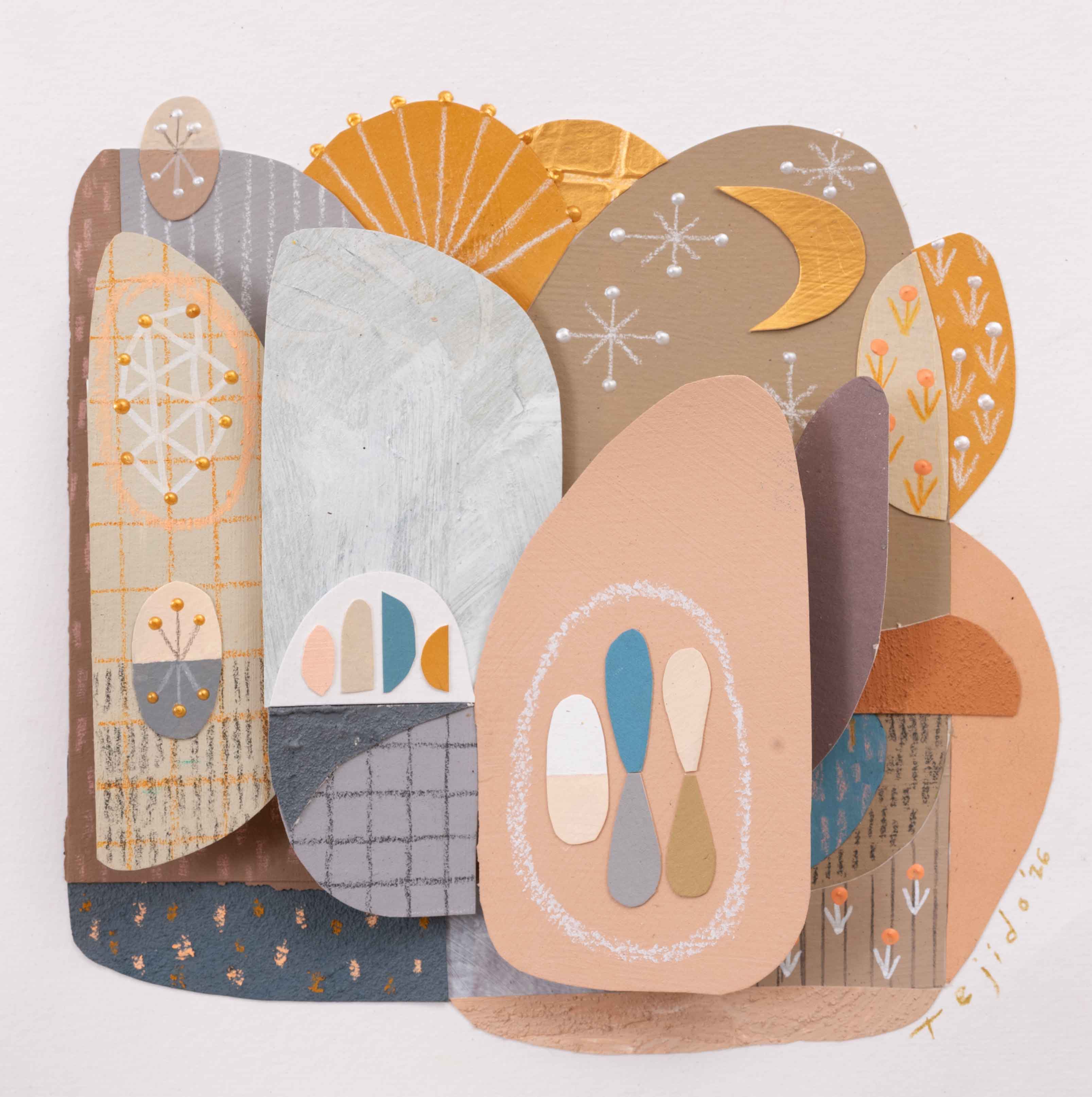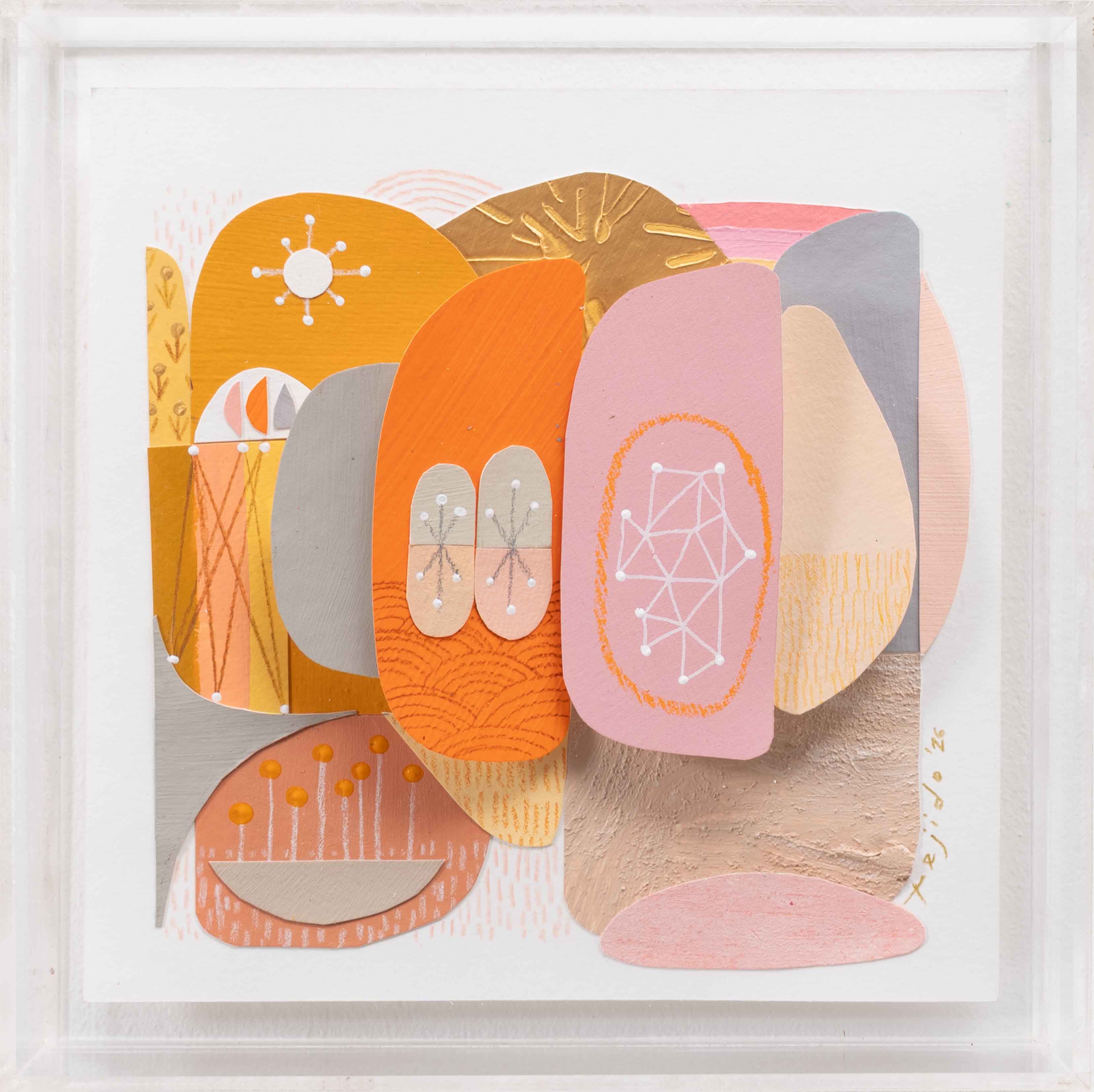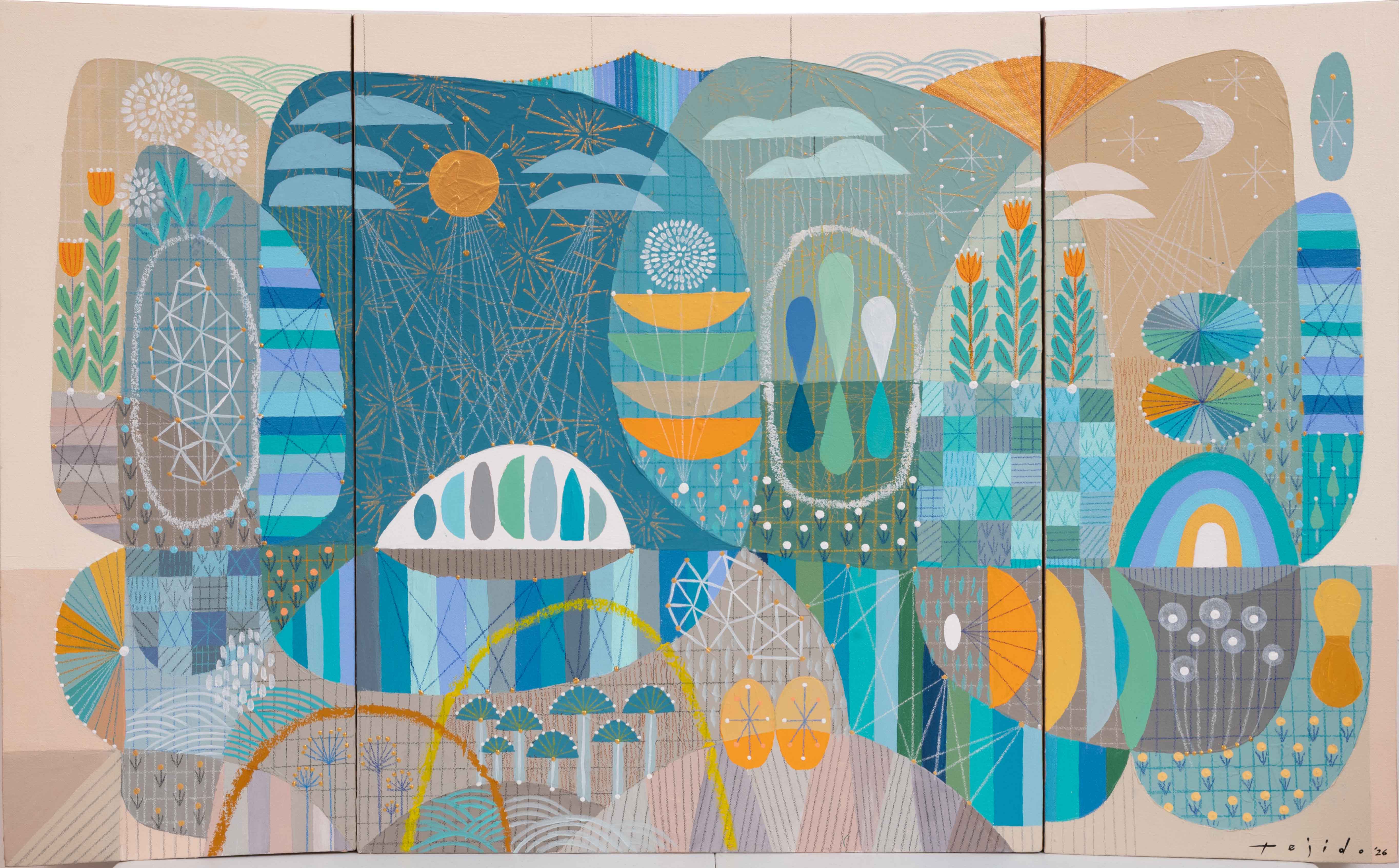
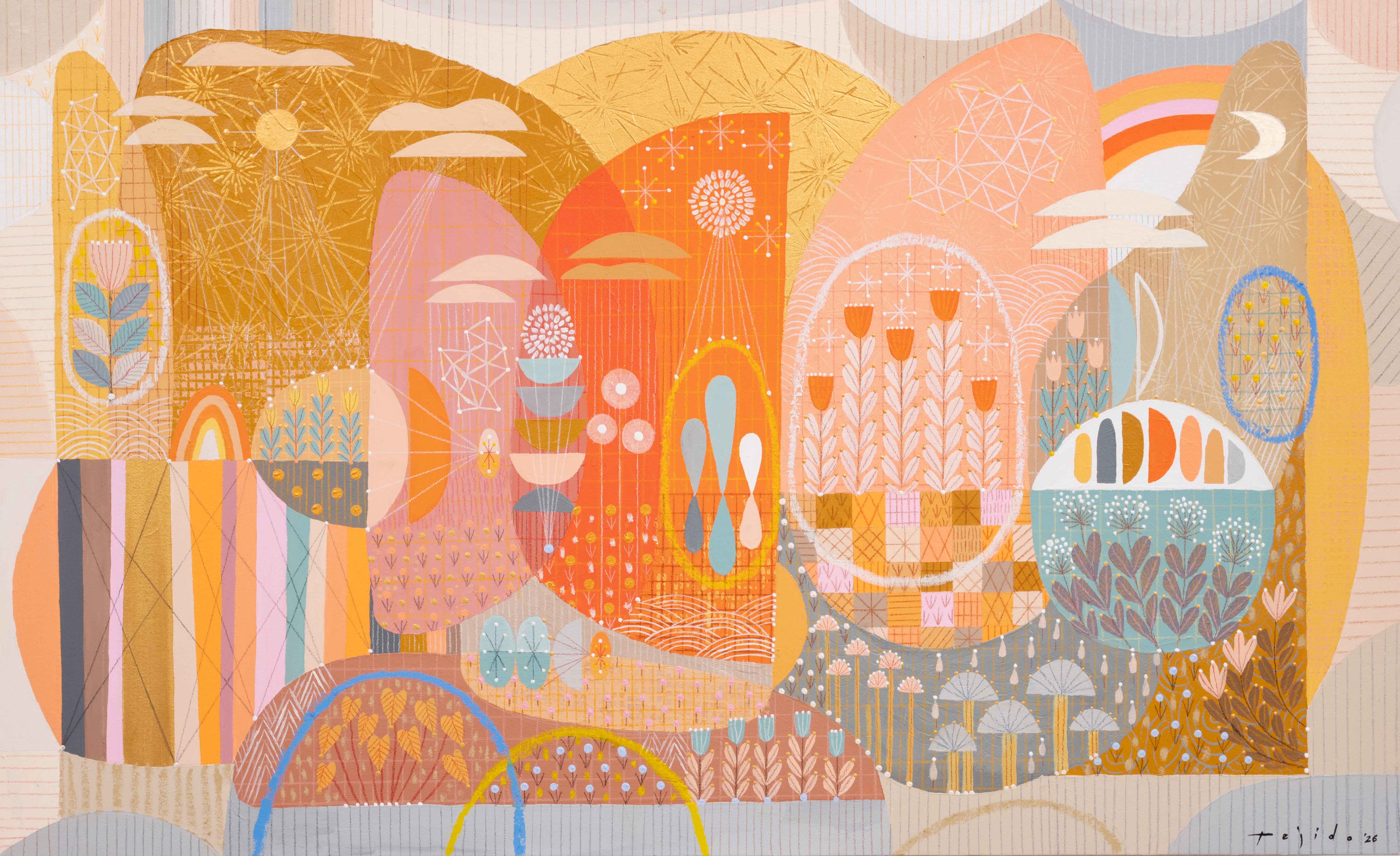
In Relative Inclinations, Jomike Tejido invites us into a space where the logic of structure meets the delight of play, and where the page—once flat, obedient—begins to lift, tilt, and breathe. Known for traversing the worlds of painting and children’s book illustration, Tejido here resists choosing between them. Instead, he stages a quiet reconciliation, allowing each discipline to inform and destabilize the other.
The works emerge from an unusual choreography: before paint touches canvas, paper is cut, folded, and engineered into “solution cards”—small kinetic studies guided by brackets, hinges, and inclined planes. These tactile sketches function like architectural maquettes, proposing not just composition but behavior. What results are canvases that feel less like surfaces and more like events—angled, responsive, and gently insistent on their dimensionality.
There is a childlike openness at play, but it is never naïve. Tejido’s process reveals a disciplined surrender, a willingness to let form lead before meaning settles. In stepping back from the authority of the brush, he allows the hand of the maker—the builder,
the tinkerer—to take precedence. The paintings thus carry the memory of their own becoming: decisions tested in paper, translated into pigment, held in balance between intention and surprise.
To encounter these works is to be reminded that structure need not constrain imagination; it can, instead, be its accomplice. Here, every angle is an invitation—to look again, to lean in, to consider how openness itself might be a form of design.